Sunday, June 8, 2014

Cather, Bronte, Seyton, Hardy, Ishiguro, Eliot, Proulx, and Defoe


It is time for a year-long update of my classic reading.

After double-checking my 'read' bookshelf on Goodreads, I updated my original Classics Club list from January 2013. I have officially read 18 classics from my list. One might think my list is shrinking, but no... because I did not have immediate access to specific novels on my original list, I have made a number of additions. I went from 66 to 78 books, so I have still have 60 to finish by January 2018.


Death Comes for the Archbishop
The completionist in me can't believe I actually added to the list, but the reader in me has loved every minute of it. For example, I had no idea I would love Willa Cather as much as I did. I first read My Antonia in high school for Mrs. Davis, my senior English teacher. What I remember most about the novel is that the setting features as a central character. This turns out to be true as well in O Pioneers! and Death Comes for the Archbishop. So, after I read Death Comes for the Archbishop, I had no choice but to read O Pioneers! even though it wasn't on my list. Cather creates such a sense of place - a topic I recently discussed with my father - and for once, it is a place I recognize and relate to. I may not live in Kansas, Nebraska, New Mexico or Colorado, but they are close enough to Oklahoma that I immediately connect with the setting. Cather makes my heart ache with nostalgia. 


Next I read Cather's Song of the Lark which turned out to be my favorite of her three novels. Song of the Lark is about the role of the artist, Thea Kronborg, and her growth. Believe me, I would prefer to read Song of the Lark any day over Portrait of the Artist as a Young Man. I'm sure there is some kind of amazing literary paper possibilities in comparing and contrasting the themes/ideas found in these two novels.

After so much American literature, I was jonesing for some British lit.and who better to turn to than one of the Bronte sisters. I'm not as familiar with Anne's work as I am with Emily or Charlotte's, so I dug right into Agnes Grey. I hesitate to say I was disappointed with Agnes Grey. It feels like heresy, but I was just a wee bit let down. Like any other Brit. lit. fan, I love a good governess story, but this one was a tad on the milk toast side. I hope the Tenant of Wildfell Hall is better than Agnes Grey.


I moved to a bit of British historical fiction in Katherine by Anya Seton. Coincidentally, I read this novel at the same time I was teaching Chaucer, so I had an enhanced view of Chaucer's life and secret love and his political and social landscape. Nothing helps render the crazy genealogy of Britain's monarchs like a good love story.

At this time of the school year I gave my students an option to read Jude the Obscure by Thomas Hardy which made me remember a colleague telling me that students love reading The Mayor of Casterbridge. She told me it is a shorter read than Tess of the d'Urbervilles and more interesting than Jude. Unfortunately, I can't offer my students the option of The Mayor of Casterbridge because I only have copies of Jude in my book closet. So, while a whopping total of two of my students read Jude (others opted for Crime and Punishment, East of Eden, and Invisible Man), I listened to The Mayor of Casterbridge on my work commute. At the close of the novel, I would say I concur with my colleague. There is hardly any downtime in the plot of The Mayor of Casterbridge. It moves swiftly, for Victorian literature, from one conflict to another. It would be a nice primer for Thomas Hardy. Still, Tess is my favorite Hardy.


Add caption
At the start of 2014 I was gearing up for the next season of Downton Abbey and saw some mention of Remains of the Day by Kazuo Ishiguro. A quick google search told me that Remains of the Day would give me the 'Butler-in-the-Big-House' fix I needed. This novel turned out to be a gem with its character development of Mr. Stevens, the head butler at Darlington Hall, and his definition of dignity. I would so love to replace my definition essay assignment from how is a hero defined in Beowulf to how is dignity defined in Remains of the Day. As well, this novel covers some aspects of British history from WWI to WWII that I had no previous knowledge. Needless to say, I had to watch the movie version with Anthony Hopkins and Emma Thompson. It was lovely - just lovely.


Back to Victorian literature, I decided to tackle the granddaddy chunkster of all Victorian literature, Middlemarch by George Eliot. Middlemarch has been on my to-read shelf for 15 years when I bought it with a giftcard at Barnes and Noble. Finally, I took the plunge, and I am just kicking myself that I didn't read it earlier. Middlemarch has everything I love in a novel -  historical information and social mores, extensive character development, and all the inherent conflicts involved with love and death. This novel covers everything! If I thought my AP students would read it, I would assign it because it addresses almost every ontological question and open AP prompt that exists. Luckily, the BBC did a seven episode mini-series which I scarfed up as soon as I finished the novel.Thank you, Netflix.


Add caption
About this time of the year I needed a modern classic - I had been faithful all year to the canonized classics, so out came The Shipping News by Annie Proulx. Wow - talk about a massive shift in style from Eliot to Proulx. It was so severe as to cause whiplash. I almost couldn't stand the parsed prose and newspaper clippings. It took me a good five or six chapters to let go of Middlemarch and enjoy The Shipping News. At first, I had zero interest in the protagonist Quoyle, but he grew on me as he experienced his own growth - which could be the author's intent. I haven't read any literary criticism of The Shipping News to know if my reaction is singular or the norm. There is also a bit of mystery to the plot which kept me engaged. I plan on renting the movie version of this novel. I'm not sure how the pacing and the newspaper article headlines will be used. I think those headlines are essential to Quoyle's inner dialogue. We will see.

Finally, I rounded out the end of the 2014 school year with Robinson Crusoe by Daniel Defoe. For some reason, I pictured the movie The Swiss Family Robinson when I looked at the title. There is no other movie to make one want a tree house like Swiss Family Robinson, so I figured I would love this novel.The only discernible difference that I see between the movie and the novel is Robinson Crusoe is about one fellow shipwrecked and surviving on an island and The Swiss Family Robinson is about an entire family shipwrecked and surviving on an island. Oh, the lists and details and lists and details I endured to make it to the end of this novel. This wretched novel will only be of use if I am stranded on an island. One element that reminded me of the movie Cast Away with Tom Hanks is that Robinson Crusoe talked to his parrot much like Tom Hanks' character Chuck Noland talks to Wilson the volleyball. That is it - that is all I have to say about Robinson Crusoe.

So, I read about 10 classic novels in the past year (not counting the novels I read for my English classes). My favorite novels are Song of the Lark, Middlemarch, and Remains of the Day. I will re-visit these novels at some point and do a bit of research on them. 

Now - on to Shirley.... 


Friday, May 17, 2013

Spin List #2

I really should do a bit of a catch-up post. I've read Death Comes for the Archbishop by Willa Cather, The Color Purple by Alice Walker, and Their Eyes Were Watching God by Zora Neale Hurston. Each novel deserves a solid review, and I will do that. However, since it is the end of the school year for me, I've got to spend more time with what is happening at LHS.

I am currently reading Beloved by Toni Morrison, so I am in shape to decide on my next classic. I participated in the last spin even hosted by the Classics Club with A Streetcar Named Desire.This time around I am going to work on the organization of my spin list a bit more. That way it will be re-usable. The number will be published on Monday. Fingers crossed for 16 - 20!

Chunksters

  1. de Cervantes, Miguel: Don Quixot
  2. Eliot, George: Middlemarch
  3. Thackeray, William Makepeace: Vanity Fair
  4. Gaskell, Elizabeth: North and South
  5. Seton, Anya: Katherine

Plays
6. Aeschylus: Oresteia
7. Aristophanes: Lysistrata
8. Euripedes: Four TragediesSophocles: 
9. The Three Theban Plays (Antigone, Oedipus the King, Oedipus at Colonus)
10. Miller, Arthur: Death of a Salesman

For School
11. Achebe, Chinua: Things Fall Apart
12. Anaya, Rudolfo: Bless Me, Ultima
13. Crane, Stephen: Red Badge of Courage
14. Hamilton, Edith: Mythology
15. Huxley, Aldous: Brave New World

Can't Wait
16. The Tenant of Wildfell Hall
17. de Laclos, Choderlos: Dangerous Liaisons
18. Marquez, Gabriel Garcia: Love in the Time of Cholera
19. Orczy, Baroness: The Scarlet Pimpernel
20. Proulx, Annie: The Shipping News

Sunday, April 14, 2013

Cold Sassy Tree

I loved Cold Sassy Tree by Olive Ann Burns. I listened to it on my work commute. There were a few days I sat in my car at work waiting for a chapter to end.

The setting for the novel is the early 1900's in Georgia. A teenage boy, Will Tweedy, narrates the novel, so the observations on life are hilarious and unintentionally insightful. Will is the favorite of his grandfather, Enoch Rucker Blakslee. This novel is equally about grandfather and grandson as Will learns from his grandfather's instructions, verbal and actual, on how to live life.

The small town setting here makes the novel. Anyone living in the south or a small town will recognize the truth of how one person's business becomes everyone's business.

Early in the novel Rucker's wife, Mattie Lou, dies. There is no doubt of the love Rucker has for his departed wife in the extravagant way she is buried. However, even though Rucker is the owner of the town general store and some property, he is a bit of a penny pincher, and much is made at the start of the novel about the fact that Rucker would never install a bathroom or running water in his house for Mattie Lou.

The immediate conflict is the question of who is going to take care of Rucker now that Mattie Lou has died. He has two daughters, Mary Willis (Will's mother) and Loma (married to an unfortunate non-starter, henpecked husband). While the bereaved family is trying to sort through their grief, Rucker almost immediately remarries another woman, Miss Love. Miss Love Simpson is much younger than Rucker and has been working at his store as a milliner.

Talk about small town gossip and disapproval. Poor Miss Love, who hails from the north and is an outsider Yankee, has little chance of earning the family's love and the town's acceptance because of her audacity to try to take the place of Mattie Lou. Everyone is up in arms over the marriage except for Will who has his own little crush on Miss Love.

I have to say at this point in the novel, I was actually feeling bad for the daughters. Here they have been loyal and true to their father, and it looks like Rucker might have married someone who will fleece him. This does happen. I'm thinking Anna Nicole Smith here. Who knows what the new wife will do with all of their mother's belongings, with the house, with the store, with the property?

The fun of this novel is finding out exactly why these two decided to get married and how their marriage sets the town and the family on its ear. During this process Will Tweedy does boy things and has boy adventures and experiences his first love with a girl from the poor side of town.

There are times in this novel where I laughed out loud and times when I cried (which is hard to explain when you are walking into work early in the morning). I would recommend reading this novel to anyone who likes a good 'ole fashioned yarn with homespun wisdom.


Saturday, April 13, 2013

A Streetcar Named Desire by Tennessee Williams

I read A Streetcar Named Desire by Tennessee Williams because of the spin list results for The Classics Club. I am lucky that it is a short, easy read of 11 scenes that can be completed in a couple of hours.

I like to mention what I am reading or what I am going to read to my students. I hope it is affirmation to them that reading is a life-long activity. I have a group of students who read the play last year, and they were very excited for me to finish, so we could talk about it. I asked them if I would like the play and almost all of them thought I would have something to say about how the women are treated.

I have the Marlon Brando movie version. I've read a few reviews saying it is difficult to stage this play. I can understand why. Much of the stage direction actually interprets the scene or highlights what is symbolic.

As far as my enjoyment on the play, I was on the fence until the end. It had a whopper of an ending; it was like a gut punch. The entire play I hoped that Blanche would find a way to resolve her situation and that Stanley would lose some of his abusive tendencies and that Stella would wise up to Stanley's and Blanche's problems. But whoa..... in the last couple of scenes things get crazy.

It is almost impossible to say any more about the play without giving away the entire plot.

I did have an interesting conversation with my students about the play. They decided that Blanche is a bit like Rachel from The Poisonwood Bible. As far as AP material, this play does make an allusion to the Elysian fields of King Arthur's time which I can work with on the open question. Also, this play critiques society, and that is always fun to talk about.


Friday, March 22, 2013

The Poisonwood Bible by Barbara Kingsolver

Re-read of The Poisonwood Bible 

I first read this novel when it was put on Oprah's Book Club list in 2000. This is a novel that I have mulled over and considered for over 12 years. So, when I had the opportunity to choose a new contemporary novel for my AP Literature class this year, I decided The Poisonwood Bible would be perfect to share with my students, and it would give me an opportunity to re-visit the work. 

The title draws you in because of the juxtaposition of the words poison and bible. Most would identify death, illness, pain, disease with the word poison, but the connotations for the word bible may not be so universal. Because I live on the buckle of the bible belt, the majority of my students identify truth, life, heaven, law/rules, the way, church, goodness, etc with the word bible. Putting two words from opposite ends of the spectrum in the title engenders questions and predictions. Why would the bible be poison? This question is like a splinter in your hand that has broken off and can't be pulled with tweezers, you just have to wait for it to work itself out.

Second, a quick check of the table of contents indicates that, like the bible, this novel is divided into books called Genesis, The Revelation, The Judges, Bel and the Serpent, Exodus, Song of the Three Children, and The Eyes in the Trees. Immediately, the extended allusion to the bible suggested in the title is furthered. In my area of the United States, not many people are familiar with the Apocrypha, so a little research reveals this novel will allude to more than the King James Version of the bible. Additionally, each book of The Poisonwood Bible has a sub-title which alludes to the novel, The Things They Carried by Tim O'Brian. 

A further preview of the novel reveals that each book is divided into chapters, and each chapter is narrated by a female member of the Price family. The daughters of Nathan and Orleanna Price, Leah, Ada, Rachel, and Ruth, are allusions to women in the bible as well.

This elaborate, extended allusion sets the stage for the journey the Price family takes as they move from Georgia to the Belgium Congo in the early 1960's to be missionaries. The conflicts the family encounter are used as a microcosm to understand the macrocosm of the conflicts the Congo has encountered in its many, devastating dealings with the 'civilized' world.
Patrice Lumumba

Jospeh Mobutu
 If you aren't already familiar with these topics, I suggest a bit of quick research on the history of the Congo, imperialism, Patrice Lumumba, and Joseph Mobutu before reading this novel.

On this read through of The Poisonwood Bible, I tried to identify why the novel stuck with me for 12 years, and I decided much of my love for this novel is because of the character development. The Price family could be any number of families I grew up with. I have met the father, Nathan Price, and wondered at his extreme devotion and his thoughtless arrogance. I love Ada's character because of her different view of the world. She quotes Emily Dickinson, develops her own palindromic language, and reads backwards. Finally, I identify with Leah's internal conflicts.

The thoroughly developed, dynamic characters are Kingsolver's vehicle to address weightier issues. Looking at my list of ontological questions, The Poisonwood Bible offers enough meat to wrestle with all of them. There are no easy answers to be found here. This novel allows for meta-cognition and, on the flip side, it begs the reader to analyze world politics and issues. It is universal and it is timely.

Ontological Questions:

1.  What is the meaning of life?
2.  How should I live?
3.  How can I accept the idea that someday my life will end?
4.  What does it mean to be a good person?
5.  What is truth?
6.  Am I brave or a coward?  Does courage matter?
7.  Do the rewards of life balance or outweigh its pain?
8.  How should people treat each other?
9.  How can man live in the ugliness of the modern world without despair?
10.  Why do evil and suffering exist?
11.  How can we tell the false from the genuine?
12.  Does my existence matter?  Do I dare to disturb the universe?

Saturday, March 16, 2013

Little Dorrit by Charles Dickens

So much depends on frame of mind.

Tackling Little Dorrit by Charles Dickens required me to change my mindset. I typically rush at a novel and devour it, much like eating lunch between 3rd and 4th hour at school. I spend little time lingering over anything. Often I don't even try to predict what will happen next because I know I will get to the end of a novel in just a few hours.

As it turns out, Little Dorrit is not a novel you gobble in one sitting. I checked Wikipedia and found, through serialization, Little Dorrit was published over the course of 19 months. So, I allowed myself a month to read this novel which made a difference in my appreciation of it. 

The novel is divided into two books: Book the First: Poverty and Book the Second: Riches.The first book is almost entirely exposition. We are introduced to about 20 characters and a number of minor conflicts.

Side Rant: Introduced is rather an understatement because Dickens does not merely introduce his reader to a character. He spends chapters on physical description, minutia, mannerisms, phrasing, etc. After his thorough introduction of characters, there is no doubt in my mind I've actually met these people. While I appreciate the details, most of the characters in this novel end up being static. I don't see a dynamic change in their personality with the resolution of the novel. At the beginning of the novel Little Dorrit and her family members can be defined as:

Amy Dorrit is Little Dorrit, the long-suffering, humble, good girl who sacrifices for her ungrateful family. 
Mr. Dorrit is the oblivious, self-important father willing to turn a blind eye to the many sacrifices his daughter, Amy, makes for his comfort and reputation.
Fanny Dorrit takes advantage of her doormat sister, Amy, in typical bi-polar fashion with equal professions of  "I hate you" and "I love you."
Tip Dorrit allows Doormat to bail him out of every bad decision he makes and expects to land on his feet in an even more profitable position.

These characters do not change by the end of the novel which is frustrating to me because I want them to grow or have an epiphany or something.

I found it almost impossible to discern the main conflict of the novel by the end of the first book. There is a bit of mystery surrounding the main protagonist, Arthur Clennam, the death of his father, the letters DNF, his stoic, religious mother, and the life-long servant, Jeremiah. I clearly missed a number of clues which would have informed me that this conflict tied the novel together. If I ever read this novel again (probably not), then perhaps I would catch the details.

Otherwise, I read 90% of the novel before I realized which story lines were the ones that would be resolved.. So, this is a novel where the journey, not the destination, is to be enjoyed. Particularly timely is the description of the Circumlocution Office which so mirrors the gridlock of American politics that I had to smile and shake my head at the same time. I suppose history is replete with examples of the business of accomplishing nothing in government.

I've already mentioned that I doubt I will re-read this novel, so next I wonder if it is worthy of the AP Lit. class. I can't imagine assigning this novel in high school. I'm not sure any student would read every page or even want to finish it. However, it is a gold mine for examples of characterization and tricky syntax. I could see myself pulling paragraphs for practice analysis. 

All told, because I allowed myself to digest Little Dorrit just a bit at a time, I did enjoy it. Next up, A Streetcar Named Desire and Poisonwood Bible

Sunday, February 24, 2013

Gossip in the Halls of LHS

Since there is so little to gossip about in the halls of LHS while we are on duty before school, between classes, and at lunch, I thought we might like to create a kind of unofficial classics book club. Yes, I know we have plenty to do (lesson plans, grading, extra-curricular activities, etc.), but it would be nice if we could have conversations about something other than the same 'ole, same 'ole.

This isn't an English teacher thing, it is a reader thing. If you like to read, then every once in a while you might like to read a literary classic. You only need to be involved at the level you want to be, so feel no pressure. You don't have to be all in. Participate as you have time. If you are interested, read on. If not, no prob., but if you know someone who might be interested, then would you pass this message along?

The Details:

I discovered a blog called The Classics Club recently, and it inspired me to make a list of 50 classics I would like to read in the next 5 years. Obviously, you don't have to make a list with 50 items, but maybe there are a few classic novels you have always wanted to read or you have heard about them at some point in your life and though you might want to read them. This is the time to jot down your list, whatever is manageable, and begin. If you are interested in my list, see it here - Keller's Classic List.

Tell a friend/ neighbor here at school what you are reading and maybe you can read the same work. I told my lunch group what I was doing, and that I was starting with Little Dorrit by Charles Dickens. Ryker decided to read it. Then I told Vicki, and she is reading along from TN. Initially, it is interesting to just share your list and find out what people have read and what they want to read.

Making Your List:

To help make your list, I have a couple of links you can check out that have lists of classic novels, plays, poetry collections, etc. Also, literary classics can be from any cannon (western, eastern) or any time period (ancient to modern). Don't feel hemmed in by too many rules. You may even want to read Young Adult classics.


  • This site combines many top 100 lists, so it is pretty comprehensive. #1: A List of Books
  • I also used this link from The Classics Club site because it has some eastern classics. The Big Book List
  • This link has the suggested works that Advanced Placement students should read for the AP Literature and Writing exam. This site is interesting because it divides classics by American, British, and World lit.


Goodreads:

You may be in a situation where you aren't sure which classic would suite your taste. If you go to the Goodreads site, you get an opportunity to identify and rate books you have read, and then the site makes suggestions for you to read based on your tastes. The process is much like using Netflix to narrow your movie choices.Also, Goodreads is a perfect place to keep track of your list.

Documenting:

Whether or not you want to document your journey is up to you. You may prefer to read a work, talk about it, and move on to the next piece. I decided to write an informal review of each item I read from my list and post it on my blog. Blogging is a different way of sharing your journey. So, no pressure for this part of the process. If you are interested in blogging what you read, I've linked two free blogging sites to get you going. I'm using one of the free options from blogger. If you decide to blog, please send me a link to your site. I would love to follow you. A plus for blogging is that it makes your list accessible to everyone else in school. That way we could look over lists and identify works we have in common.


www.blogger.com


wordpress.org


Sources:

No need to pay for all of these classics. Our LHS library has most of them. If you have an e-reader, then many classics are free. Also, if you think you don't have time to set aside for reading, consider using your daily commute to participate. I listen to audiobooks on my way to and from work.

The End:

So, that's it. Thank you for your attention and consideration. I hope you decide to read a classic and find someone in the school to read the same work. Like I said before, I'm reading Little Dorrit by Dickens, and I am listening to Cold Sassy Tree by Olive Ann Burns. I know I will read Pride and Prejudice and A Streetcar Named Desire here soon, but I am open to suggestions from my friends and co-workers for upcoming choices. Happy Reading.

Jennie

Wednesday, February 20, 2013

Bloglovin

Follow my blog with Bloglovin

Spin List Results

The Classic Club spin list number is 14. That means I will be reading A Streetcar Named Desire by T. Williams. A quick glance at wikipedia tells me the play won a Pulitzer Prize for drama. I'm sure I will check out the movie version with Marlon Brando. I need to finish this by April 1.

Sunday, February 17, 2013

The Handmaid's Tale Review

The Handmaid's Tale
Book #1: The Handmaid's Tale by Margaret Atwood
Finished on February 6, 2013.

As a surprise my SO put a few audio books from my Classics Club list on my iPod for the NMSI trip to Killeen, TX. The trip can take anywhere from 5 - 6 hours depending on if I stop for cupcakes at Ultimate Cupcake. I did not stop this time around (regrets), so the trip was close to 5 hours and in that time I finished listening to The Handmaid's Tale.

I was shocked at how fast the trip went and how short the book is. I think my students could easily read this for a two week assignment and the novel addresses at least half of the ontological questions we discuss in class. Here is the list of ontological questions I use. Of course I was made aware of this list through an AP conference.

1.  What is the meaning of life?
2.  How should I live?
3.  How can I accept the idea that someday my life will end?
4.  What does it mean to be a good person?
5.  What is truth?
6.  Am I brave or a coward?  Does courage matter?
7.  Do the rewards of life balance or outweigh its pain?
8.  How should people treat each other?
9.  How can man live in the ugliness of the modern world without despair?
10.  Why do evil and suffering exist?
11.  How can we tell the false from the genuine?
12.  Does my existence matter?  Do I dare to disturb the universe?

For whatever reason I focused on incidents in the novel concerning bravery and cowardice. At one point, Offred considers whether or not she is brave. After all, a decision can only be brave if there is something to lose or a possible consequence. In Offred's case spying for the resistance would mean a heavy punishment, even death. This conundrum and many others faced in the novel are great for class discussion and immediate, personal connections.

I find it impossible to rate a classic based solely on my enjoyment of the plot. I've got a couple of ideas brewing for a rating system which I will detail later. For now, suffice it to say if I really like a piece then it has potential for re-reading; however, I am also reading with a lens toward workability in an AP course. In this case, I find The Handmaid's Tale is teachable. It could replace The Awakening in my syllabus because it is short but incorporates plenty of the ontological questions (not to mention there is sex which is a big seller in high school). As far as re-reading this novel, I doubt I would do so for pleasure.

Next: I'm reading Little Dorrit and I'm listening to Cold Sassy Tree.

Pride and Prejudice Challenge


The Classic Club has really opened my eyes to a world of like-minded readers. I don't know where I've been and what I've been doing for the past couple of years, but there are so many things to do/read on-line that I'm dumbfounded. I've been checking out other possible challenges for reading during the year and decided that I absolutely must take on the Pride and Prejudice challenge. It is the bicentenary of the publication of the novel. This challenge can be a mixture of reading or watching anything (movies, t.v. series, related novels, etc.) related to Pride and Prejudice. I looked at a number of lists to come up with my own. I'm not sure that I will go in any particular order except to read the novel first and watch the 2005 movie last.


1. Pride and Prejudice by Jane Austen, 1813 - It has been two years since I read P&P, so I need to re-read for a solid foundation. I hate when I'm reading a sequel and I can't quite remember an important detail.


2. Becoming Jane by Julian Jarrold, 2007 - I love this movie.

3. Death Comes to Pemberley by P. D. James, 2011 - I am inspired to choose this novel because it is featured on so many participant lists.

4. Pride and Prejudice BBC miniseries, 1995 - I compare all Mr. Darcys to Mr. Firth's Darcy.
Love Mr. Darcy 

5. Austenland by Shannon Hale, 2007 - While I want to read the novel first, there is no doubt I will try to see the movie. From what I can tell, the movie premiered at the Sundance Film Festival at the end of January where it was picked up by Sony. My piece of advice or threat to Sony is get the movie out there now!

6. An Unlikely Duet by Leila M. Silver, 2012 - It seems there are a number of sequels featuring Georgiana. Hopefully this one doesn't disappoint.

7.Charlotte Collins: A Continuation of Jane Austen's Pride and Prejudice by Jennifer Becton, 2010 - I've often imagined Charlotte's life after P&P, and it isn't pretty or fun. I hope Ms. Becton does a better job with Charlotte than I have.

8. The Unexpected Miss Bennett by Patrice Sarath, 2011 - I'm not sure I would have chosen this novel except I had a student recently write a paper about P&P where she spent a good deal of time analyzing Mary. 


9. Bride and Prejudice by Gurinder Chadha, 2004 - I have always wanted to watch this movie. 

10. Letters from Pemberley: The First Year by Jane Dawkins, 1999 - I actually have this epistolary novel sitting on my bookshelf. I have not read it. It looks like it is from Elizabeth's POV in letters to her sister, Jane. Up to this point I have not put anything on my list from Elizabeth's perspective.

11. An Assembly Such as This by Pamela Aidan, 2003 - This is first in a trilogy. I am skeptical about reading this one because the reviews are all over the place. Still, as it is from Darcy's perspective and incorporates some original dialogue, it is on the list.

12. Pride and Prejudice movie by Joe Wright, 2005 - I can just picture myself watching this movie over Christmas break at the end of the year.


So, there it is. I'm not a stickler for rules and may add or change titles per my interests. See you in Austenland.

Wednesday, February 13, 2013

Spin List


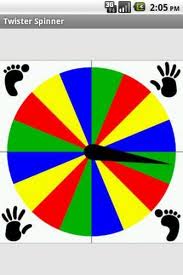
Wah, I know I must post my review of The Handmaid's Tale, but this spin list will have to come first. I've never thought to do an activity like this. We are supposed to pull 20 titles of our list that we haven't read (for me that is really all of them). The Classics Club site suggests a mixture of titles. Then, on February 18, 2013, they will pick a number. The title corresponding with the number is what we should try to read by April 1st. I'm in when it comes to games, so this sounds fun. I'm sure I could incorporate this type of activity in class. So, here is my spin list. I feel like I'm about to play Twister and there is a hot guy on the mat and a stinky guy. My luck could go either way.


  1. Gaskell, Elizabeth: North and South
  2. Achebe, Chinua: Things Fall Apart
  3. Burgess, Anthony: A Clockwork Orange
  4. de Laclos, Choderlos: Dangerous Liaisons
  5. Eliot, George: Middlemarch
  6. Gaskell, Elizabeth: Wives and Daughters
  7. Hesse, Hermann: Siddhartha
  8. Ishiguro, Kazuo: Remains of the Day
  9. Marlowe, Christopher: Doctor Faustus
  10. O’Connor, Flannery: Wise Blood
  11. Radcliffe, Anne: The Mysteries of Udolpho
  12. Soseki, Natsume: Kokoro
  13. Voltaire: Candide
  14. Williams, Tennessee: A Streetcar Named Desire
  15. Beckett, Samuel: Waiting for Godot
  16. Huxley, Aldous: Brave New World
  17. Orczy, Baroness: The Scarlet Pimpernel
  18. Albee, Edward: Who’s Afraid of Virginia Woolf?
  19. Turgenev, Ivan: Fathers and Sons
  20. Dreiser, Theodore: American Tragedy

Thursday, January 31, 2013

The Classics Club

The Classics Club

I'm psyched that I just found a great site for those who read and want to discuss classics. To join, one must put together a list of fifty (or more) classics to read within the next 5 years which would be January 31, 2018 for me. I figure I can read about 1 classic a month. So, I've made my list and am looking forward to the fun.

For the most part, I put books on the list if I think I need to read them for school. There is an off chance that I might apply at some time to be a reader for the AP English Literature exam. If accepted and asked to read the open question, I would need to be familiar with a wide variety of books and plays. Sad to say, I've spent the past 15 years reading the same classics over and over and over again. I can tell you anything you want to know about Wuthering Heights, Macbeth, Hamlet, and Frankenstein. Most of what you want to know about The Scarlet Letter, The Great Gatsby, The Kite Runner, The Crucible, Pride and Prejudice, and Heart of Darkness, and some of what you want to know about Jane Eyre, Wide Sargasso Sea, The Picture of Dorian Gray, and Obason.

I'd love to have meaningful discussions with my fellow teachers about other works. I hate when I'm at an AP conference and someone mentions a classic I haven't read, and everyone gives me the look which suggests I'm no kind of English teacher if I haven't read a particular book.

So, without further ado:


  1. Achebe, Chinua: Things Fall Apart
  2. Aeschylus: Oresteia
  3. Albee, Edward: Who’s Afraid of Virginia Woolf?
  4. Anaya, Rudolfo: Bless Me, Ultima
  5. Angelou, Maya: I Know Why the Caged Bird Sings
  6. Aristophanes: Lysistrata
  7. Atwood, Margaret: A Handmaid’s Tale    - Finished on Feb. 6, 2013
  8. Beckett, Samuel: Waiting for Godot
  9. Bradbury, Ray: Fahrenheit 451
  10. Burgess, Anthony: A Clockwork Orange
  11. Burns, Olive: Cold Sassy Tree - Finished March 28, 2013
  12. Cather, Willa: Death Comes for the Archbishop - Finished April 6, 2013
  13. Crane, Stephen: Red Badge of Courage
  14. de Cervantes, Miguel: Don Quixote
  15. de Laclos, Choderlos: Dangerous Liaisons
  16. Defoe, Daniel: Moll Flanders
  17. Dickens, Charles: Little Dorrit - Finished on March 10, 2013
  18. Dostoevsky, Fyodor: Crime and Punishment
  19. Dreiser, Theodore: American Tragedy
  20. Eliot, George: Middlemarch - Finished March 30, 2014
  21. Euripedes: Four Tragedies
  22. Forster, E.M.: Howard’s End
  23. Fowles, John: The French Lieutenant’s Woman
  24. Gaskell, Elizabeth: North and South
  25. Gaskell, Elizabeth: Wives and Daughters
  26. Hamilton, Edith: Mythology
  27. Hardy, Thomas: Jude the Obscure
  28. Hardy, Thomas: Mayor of Casterbridge - Finished December 15, 2013
  29. Heller, Joseph: Catch-22
  30. Hesse, Hermann: Siddhartha
  31. Hugo, Victor: Les Miserables
  32. Hurston, Zora Neale: Their Eyes Were Watching God - Finished April 23, 2013
  33. Huxley, Aldous: Brave New World
  34. Irving, John The World According to Garp
  35. Ishiguro, Kazuo: Remains of the Day - Finished on January 30, 2014
  36. James, Henry: The Wings of the Dove
  37. Kawabata, Yasunari: Snow Country
  38. Kerouac, Jack: On the Road
  39. Lady Muraski: The Tale of the Genji
  40. Marlowe, Christopher: Doctor Faustus
  41. Marquez, Gabriel Garcia: Love in the Time of Cholera
  42. McCullers, Carson: The Heart is a Lonely Hunter
  43. Miller, Arthur: Death of a Salesman
  44. Morrison, Toni: Beloved - Finished May 31, 2013
  45. O’Connor, Flannery: Wise Blood
  46. Orczy, Baroness: The Scarlet Pimpernel
  47. Orwell, George: 1984
  48. Paton, Alan: Cry, the Beloved Country
  49. Proulx, Annie: The Shipping News - Finished on March 2, 2014
  50. Radcliffe, Anne: The Mysteries of Udolpho
  51. Salinger, J.D.: The Catcher in the Rye
  52. Seton, Anya: Katherine - Finished November 20, 2013
  53. Sinclair, Upton: The Jungle
  54. Sophocles: The Three Theban Plays (Antigone, Oedipus the King, Oedipus at Colonus)
  55. Soseki, Natsume: Kokoro
  56. Steinbeck, John: Cannery Row
  57. Thackeray, William Makepeace: Vanity Fair
  58. Tolstoy, Leo: Anna Karenina
  59. Turgenev, Ivan: Fathers and Sons
  60. Voltaire: Candide
  61. Vonnegut, Kurt: Slaughterhouse Five
  62. Walker, Alice: The Color Purple - Finished April 20, 2013
  63. Waugh, Evelyn: Brideshead Revisited
  64. Welch, James: Winter in the Blood
  65. Williams, Tennessee: A Streetcar Named Desire - Finished on March 30, 2013
  66. Woolf, Virginia: To the Lighthouse
The following works were added after my original list.
67. The Tenant of Wildfell Hall: Anne Bronte
68. Clarissa: Or the History of a Young Lady: Samuel Richardson
69: Pride and Prejudice by Jane Austen - Finished August 10, 2013
70. The Poisonwood Bible by Barbara Kingsolver (re-read finished March 19, 2013)
71. David Copperfield by Charles Dickens
72. Far From the Madding Crowd by Thomas Hardy
73. Parade's End by Ford Maddox Ford
74. The Song of the Lark by Willa Cather - Finished July 15, 2013
75. O Pioneers! by Willa Cather - Finished July 30, 2013
76. Agnes Grey by Anne Bronte - Finished August 22, 2013
77. Robinson Crusoe by Daniel Defoe - Finished May 15, 2014
78. Shirley by Charlotte Bronte


Sunday, June 6, 2010

You Can Do It - Apron

I made this image card using From My Kitchen and my Gypsy. I don't mind saying that I need practice on welding images together. This card actually opens backwards and for some reason, I could not get the sizing all the same with some of the layers. Needless to say I have a lot to learn but I had a lot of fun as well. I did stamp - You Can Do It from one of the My Pink Stamper stamp sets- on the inside. This card goes to my mother as she is about to face a challenge next week.

Challenge for My Creative Time

I made this card for the Throwback Thursday challenge at http://www.creativetimeforme.com It is fitting that this is the very FIRST card I made with my Gypsy. Luckily, I've had Emma's videos to get me ready for how to put everything together. I thought the purple leopard print was kinda funny for a cow. My DH did say - Holy cow, that cow is so ugly, he is pretty. As I drive past farmland every day and see cows, I felt the need to have my own designer cow. I'll be giving this card to my sister-in-law. I used From My Kitchen cart as I don't have many carts with animal images.

Saturday, May 15, 2010

Father's Day Card for MPS Challenge

I made this card for my father and for the MyPinkStamper Challenge. The challenge is to use green, yellow, and brown for the card. It is hard to tell in the picture but I DO have yellow - so saffron. I used the Pagoda Cart to make all of the images. A word of caution - the little flowers on the branches take forever to glue on. I think if I use the branches again, I would probably do some kind of stickels instead of glueing on the flowers